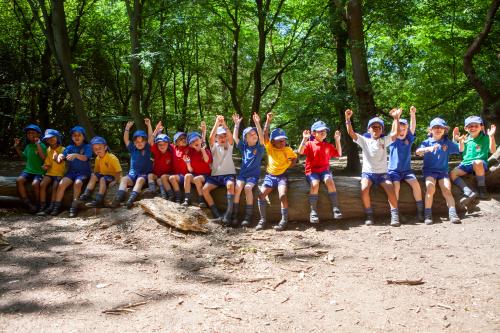
KS1 boys sitting on a log with their hands up

Key Stage 1

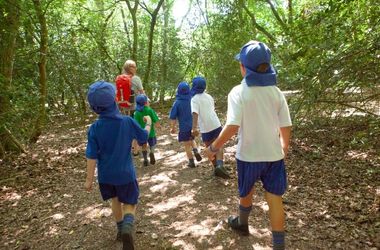
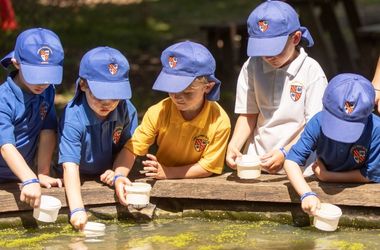
Flexible and adaptable activities led by experienced, well qualified environmental education officers, offering outdoor fun and exploration, which can be tailored to meet your group’s needs. 

The following table visualises how the KS1 activities offered by the Hive link to the National Curriculum to help you select the right activity for your group. More information on each activity can be found by following the links lower down on the page.

 Meet the Animals Meet the CompostersPlant Sensory TrailPond HabitatsWoodland HabitatsForest Map Adventure
Science
Year One 
Topic: Plants 
Identify and name a variety of common wild and garden plants, including deciduous and evergreen trees.   X  X
Identify and describe the basic structure of a variety of common flowering plants, including trees.    X   
Topic: Animals, including Humans
Identify and name a variety of common animals including fish, amphibians, reptiles, birds, and mammals.  XX XXX
Identify and name a variety of common animals that are carnivores, herbivores, and omnivores. XX XX 
Describe and compare the structure of a variety of common animals (fish, amphibians, reptiles, birds, and mammals, including pets). XX XX 
Identify, name, draw and label the basic parts of the human body and say which part of the body is associated with each sense.   X   
Topic: Seasonal Changes 
Observe changes across the four seasons.   X  X
Observe and describe weather associated with the seasons and how day length varies.   X  X
Year Two
Topic: Living Things and their Habitats
Explore and compare the differences between things that are living, dead, and things that have never been alive.  X    
Identify that most living things live in habitats to which they are suited and describe how different habitats provide for the basic needs of different kinds of animals and plants, and how they depend on each other. XX XXX
Identify and name a variety of plants and animals in their habitats, including micro-habitats. XX XXX
Describe how animals obtain their food from plants and other animals, using the idea of a simple food chain, and identify and name different sources of food. XX XX 
Topics: Animals, including Humans
Notice that animals, including humans, have offspring which grow into adults. X  X  
Find out about and describe the basic needs of animals, including humans, for survival (water, food, and air). X  XX 
Describe the importance for humans of exercise, eating the right amounts of different types of food, and hygiene.       
Geography
Topic: Human and Physical Geography
Identify seasonal and daily weather patterns in the United Kingdom and the location of hot and cold areas of the world in relation to the Equator and the North and South Poles.       
Use basic geographical vocabulary to refer to key physical features and key human features.      
Topic: Geographical Skills and Fieldwork 
Use world maps, atlases, and globes to identify the United Kingdom and its countries, as well as the countries, continents and oceans studied at this key stage.       
Use simple compass directions (North, South, East and West) and locational and directional language [for example, near and far; left and right], to describe the location of features and routes on a map.      X
Use aerial photographs and plan perspectives to recognise landmarks and basic human and physical features; devise a simple map; and use and construct basic symbols in a key.      X
Use simple fieldwork and observational skills to study the geography of their school and its grounds and the key human and physical features of its surrounding environment.       

Choose two activities from the options below to make your own programme for your visit, or we can design a bespoke day for your group.

We recommend that you schedule your arrival time between 9.30-10am and departure time between 2-2.30pm.

At lunchtime you will have access to toilets, a heated classroom and an outside area to play or have a picnic.