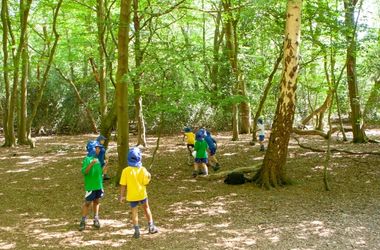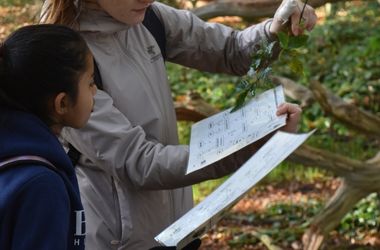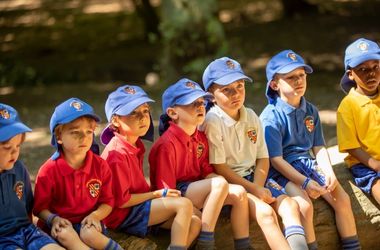
Flexible and adaptable activities led by experienced, well qualified environmental education officers, offering outdoor fun and exploration, which can be tailored to meet your group’s needs.
The following table visualises how the lower KS2 activities offered by the Hive link to the National Curriculum to help you select the right activity for your group. More information on each activity can be found by following the links lower down on the page.
| Garden Map Coordinate Trail | Animals with or without Bones | Stone Age Survival | Pond Habitats | Woodland Habitats | Plant Detectives | Human Impacts* | Water Sustainability* | Meet the Composters* | |
| Science | |||||||||
| KS2 | |||||||||
| Topic: Working Scientifically | |||||||||
| Asking relevant questions and using different types of scientific enquiries to answer them. | X | X | X | ||||||
| Setting up simple practical enquiries, comparative and fair tests. | X | X | X | ||||||
| Year Three | |||||||||
| Topic: Plants | |||||||||
| Identify and describe the functions of different parts of flowering plants: roots, stem/trunk, leaves, and flowers. | X | ||||||||
| Explore the requirements of plants for life and growth (air, light, water, nutrients from soil, and room to grow) and how they vary from plant to plant. | X | X | |||||||
| Investigate the way in which water is transported within plants | X | ||||||||
| Explore the part that flowers play in the life cycle of flowering plants, including pollination, seed formation and seed dispersal. | X | ||||||||
| Topics: Animal, including Humans | |||||||||
| Identify that animals, including humans, need the right types and amount of nutrition, and that they cannot make their own food; they get nutrition from what they eat. | X | X | X | X | |||||
| Identify that humans and some other animals have skeletons and muscles for support, protection, and movement. | X | X | X | X | |||||
| Year Four | |||||||||
| Topics: Living Things and their Habitat | |||||||||
| Recognise that living things can be grouped in a variety of ways. | X | X | X | X | X | ||||
| Explore and use classification keys to help group, identify and name a variety of living things in their local and wider environment. | X | X | X | X | |||||
| Recognise that environments can change and that this can sometimes pose dangers to living things. | X | X | X | X | X | ||||
| Topics: Animals, including Humans | |||||||||
| Construct and interpret a variety of food chains, identifying producers, predators, and prey. | X | X | X | ||||||
| Topic: States of Matter | |||||||||
| Identify the part played by evaporation and condensation in the water cycle and associate the rate of evaporation with temperature. | X | ||||||||
| Geography | |||||||||
| KS2 | |||||||||
| Topic: Human and Physical Geography | |||||||||
| Describe and understand key aspects of physical geography, including climate zones, biomes and vegetation belts, rivers, mountains, volcanoes and earthquakes, and the water cycle. | X | ||||||||
| Describe and understand key aspects of human geography, including types of settlement and land use, economic activity including trade links, and the distribution of natural resources including energy, food, minerals and water. | X | X | |||||||
| Topic: Geographical Skills and Fieldwork | |||||||||
| Use maps, atlases, globes, and digital/computer mapping to locate countries and describe features studied. | X | X | |||||||
| Use the eight points of a compass, four and six-figure grid references, symbols, and key (including the use of Ordnance Survey maps) to build their knowledge of the United Kingdom and the wider world. | X | ||||||||
| Use fieldwork to observe, measure, record and present the human and physical features in the local area using a range of methods, including sketch maps, plans and graphs, and digital technologies. | X | X | X | ||||||
| History | |||||||||
| KS2 | |||||||||
| Changes in Britain from the Stone Age to the Iron Age. | X | ||||||||
*All of the sessions we run here at The Hive are focused on our mission of inspiring the climate leaders of tomorrow through connections with nature. However, the following activities directly address climate action or sustainability skills.
Choose two activities from the list below to make your own programme for your visit or we can design a bespoke day for your group.
We recommend that you schedule your arrival time between 9.30-10am and departure time between 2-2.30pm.
At lunchtime you will have access to toilets, a heated classroom and an outside area to play or have a picnic.
Year 3: Classroom based activity
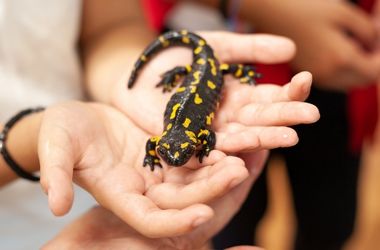
An indoor, hands on activity to explore bones and handle our vertebrate and invertebrate animals.
Year 3 and 4
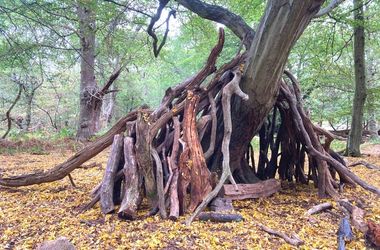
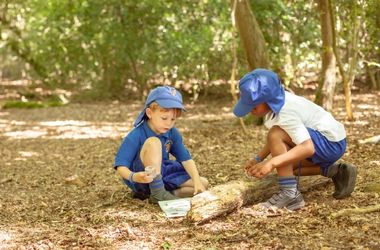
Can you build a shelter in the forest that could keep you warm and dry?
Year 3 and 4
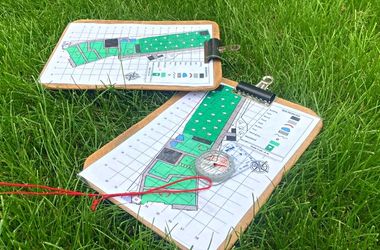
Use your map reading skills to follow a trail around our grounds.
Year 4
How do people affect the forest and how can we look after it?
Years 3 and 4
What are the ingredients for compost and who helps to make it?
Year 3
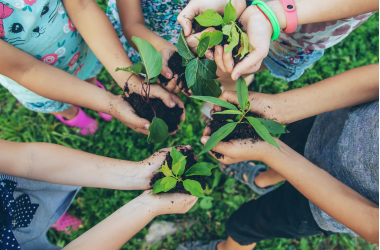
Learn about different parts and functions of plants in the forest.
Year 4 April to October only
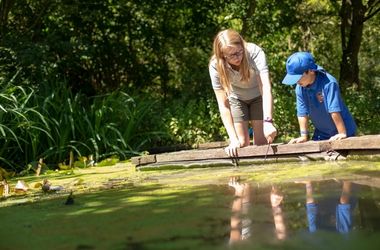
Explore a pond habitat, using keys to classify animals and creating food chains.
Year 3
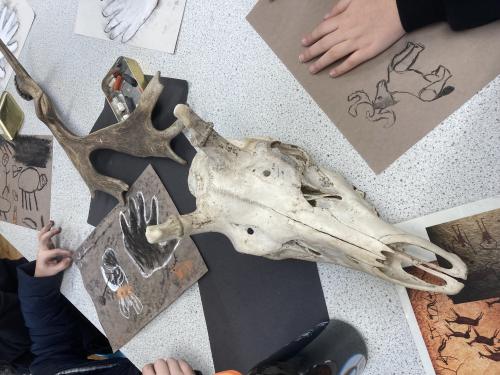
Become a Stone Age hunter-gatherer and learn how to survive in the forest. This is a full day activity.
Year 3 and 4
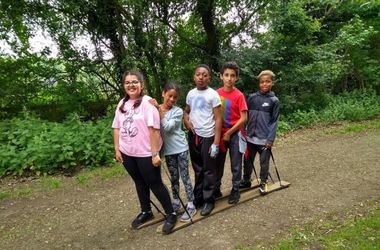
A variety of short, fun activities to encourage trust, teamwork and social skills.
Year 4
How much water do you use every day?
Year 4
Explore a woodland habitat, using keys to classify forest invertebrates and creating food chains.
Flexible and adaptable activities led by experienced, well qualified environmental education officers, offering outdoor fun and exploration, which can be tailored to meet your group’s needs.
Inspire greater physical, mental and emotional wellbeing, with a toolbox of approaches that pupils can apply in their everyday lives. (Supports PSHE.)